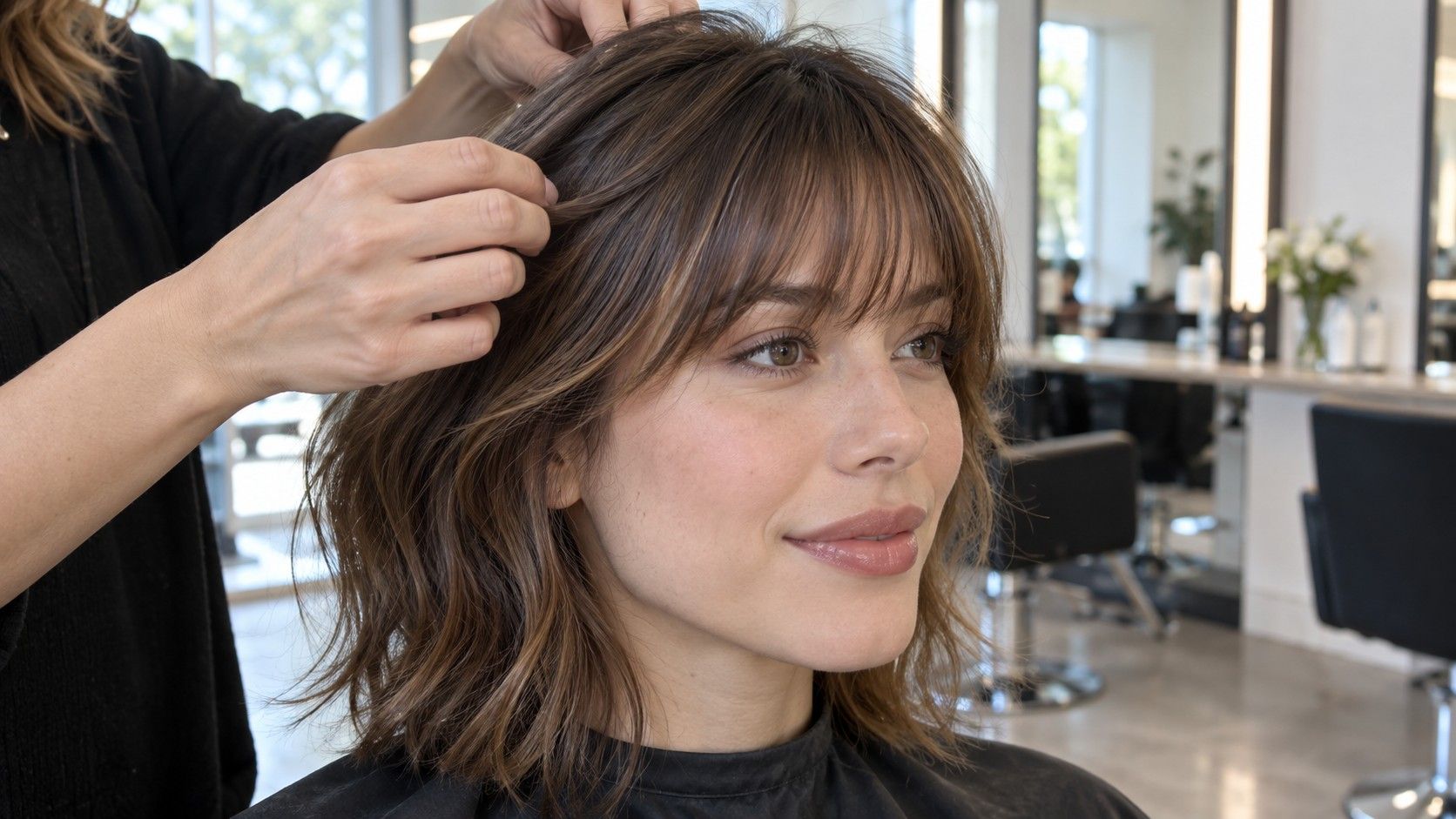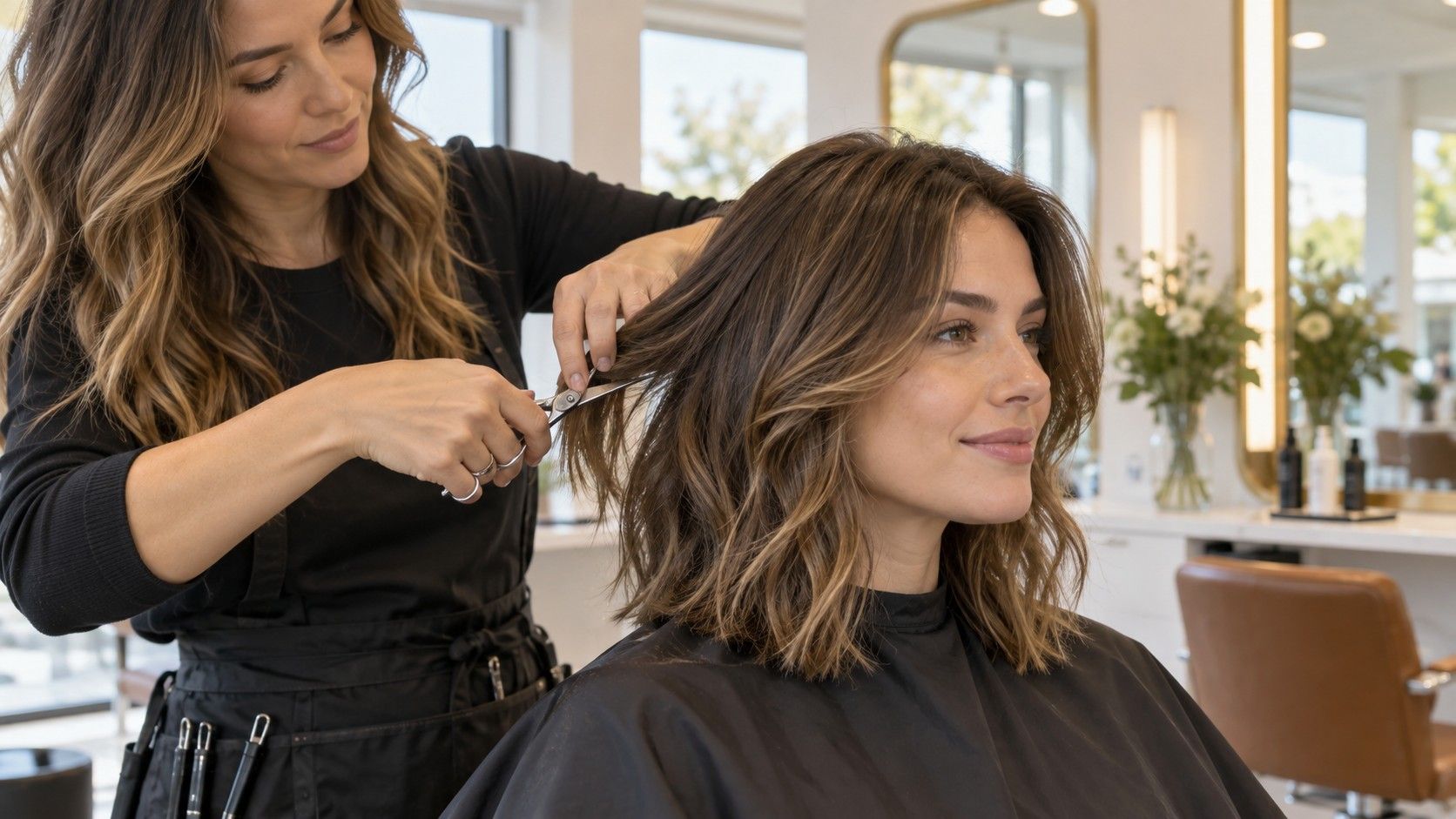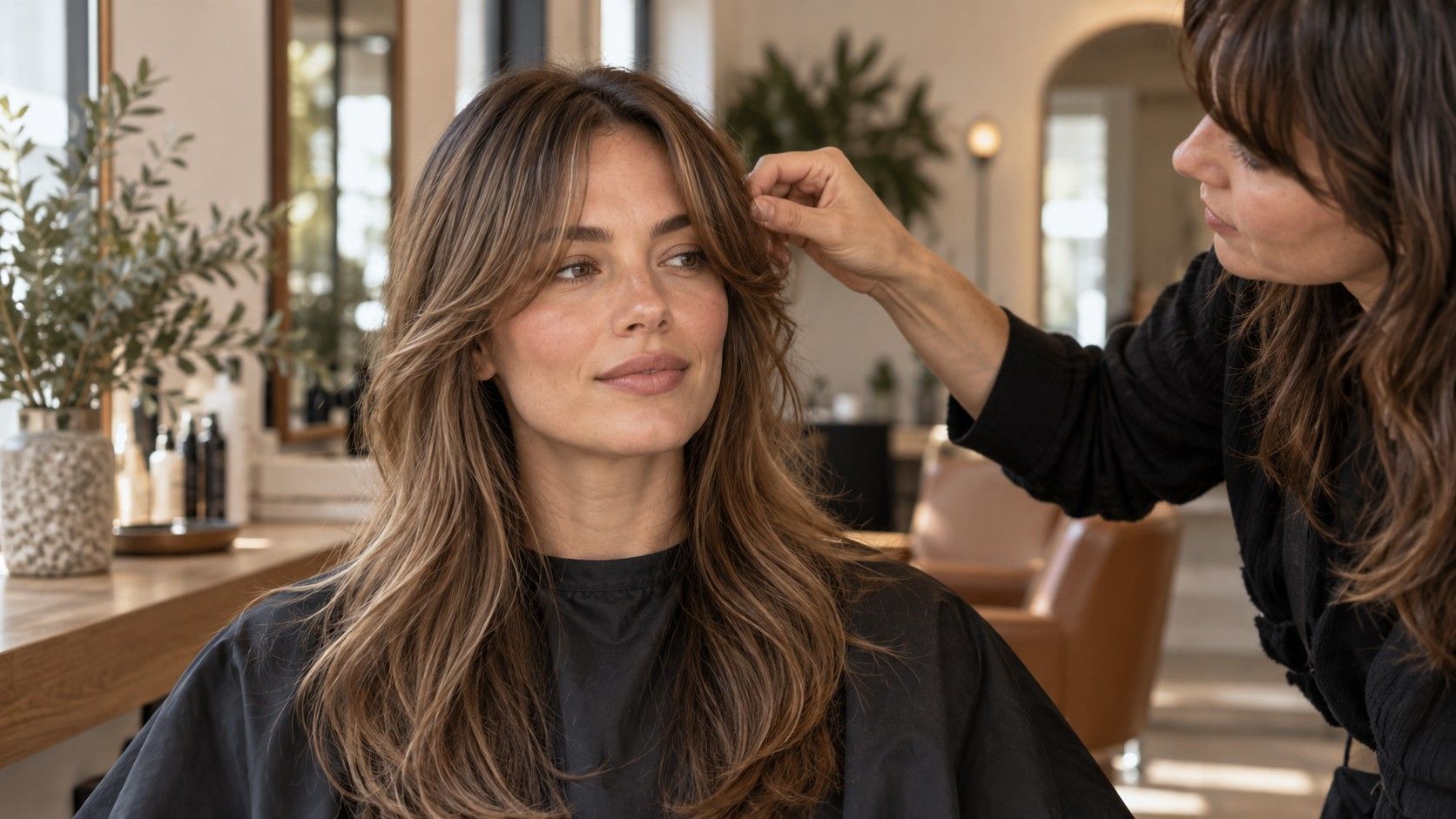
Bangs can change the frame around a high or wide forehead quickly, but they are not just a decorative strip of hair. Their starting point, width, density, and natural direction decide whether they settle softly or spend every morning arguing with you. The sensible choice begins with the hairline you actually have, including the cowlick you may have learned to ignore.
Check the growth pattern before choosing a shape
At home, dampen only the front section, comb it straight down, and let it dry without a brush for a few minutes. Watch where it separates. A strong cowlick at one temple can split a full fringe into two sections; a double crown may push the center forward or back. None of this rules out bangs, but it changes the easiest shape. A heavy, straight-across line is usually the least forgiving when the hair wants to travel sideways.
Also notice where the hairline begins at the corners. A forehead can be high without being wide, or wide without being especially tall. Full bangs for a high forehead can create a pleasing horizontal break, while a wide forehead sometimes benefits more from fringe that extends softly toward the temples. The mirror at arm's length is more honest than a very close selfie, which tends to exaggerate the center of the face.
Curtain bangs are flexible, not effortless
Curtain bangs are often the first suggestion because their center is shorter and their outer sections blend into the haircut. They leave some forehead visible, which can feel less abrupt than a full fringe. On hair that has a natural center or gentle off-center part, they can create width around the eyes and cheekbones. They are a good middle ground for someone unsure about committing to a solid line.
The limit is their daily behavior. Curtain bangs need a direction: a quick blow-dry away from the face, a roller while you make coffee, or at least a reset with water after sleeping. In humid weather, fine curtain pieces can split and look sparse. If you dislike styling tools and your hair is very straight, a slightly denser, longer curtain shape may be easier than a fragile feathery one.
| Fringe shape | Useful when | Be careful if |
|---|---|---|
| Full straight fringe | You want a clear brow-level horizontal line | A cowlick or very oily skin separates it quickly. |
| Wispy fringe | You want softness and a gradual change | Fine hair may make it disappear in bright light. |
| Curtain bangs | You keep a center or relaxed side part | You do not want to direct the roots after washing. |
| Side-swept bangs | Your hair already falls to one side | The chosen side changes constantly through the day. |
Full and wispy fringes solve opposite problems
A full fringe has enough density to read as a shape from several feet away. It can make the forehead feel less exposed and give a simple cut a stronger outline. The trade-off is upkeep: it needs washing or refreshing more often than the rest of the hair, and the shortest center pieces reveal a trim growing out quickly. If you wear glasses, test the intended length with the frames on; bangs that brush the lenses can become annoying fast.
Wispy bangs use fewer strands and show more skin. They can be lovely on a small or delicate face, but they are not always the best bangs for a large forehead if the goal is visible coverage. They often look fuller in a styled photo than they do after a walk outside. A sensible compromise is a denser center that softens into finer edges, rather than an even thin strip across the entire forehead.
Width changes the balance as much as length
The width of a fringe is set by the triangle of hair taken from the front. A narrow triangle creates a small central band; a wide triangle reaches toward the temples and has more visual weight. For bangs for a wide forehead, width can be useful, but taking too much hair may make the rest of the cut look thin, especially around the crown. The stylist should show you the proposed section before cutting.
Pay attention to the outer corners. A fringe that ends too abruptly at the center of the brow can make the forehead appear wider by contrast. Softening the ends into a face frame is usually more forgiving. This is also where a side-swept shape can help: it makes a diagonal rather than a rigid horizontal line, while leaving enough hair at the temples to connect the fringe to the rest of the cut.
Build a routine around humidity and skin, not ideals
Bangs meet the forehead, so they collect skincare, sunscreen and oil more quickly than lengths do. Many people find a tiny morning wash of just the fringe more useful than trying to make a full wash last another day. Dry shampoo can help at the roots, but too much makes fine bangs stiff and dull. Keep a small round brush or a roller if you prefer a curve rather than a flat strip.
Humidity changes the plan. Naturally wavy hair may need the fringe cut a little longer in its dry state; straightened hair may spring back as soon as rain arrives. During the consultation, say whether you usually air-dry, diffuse, or blow-dry the front. That one detail helps set an honest length. A fringe cut for a smooth salon finish can be surprisingly short once your own texture returns.
Expect short, specific maintenance appointments
Most bangs need attention before the rest of the haircut does. Depending on density and the chosen length, the center may want a trim around every three to five weeks. This is not an argument against them; it is simply the rhythm. Ask whether your salon offers quick fringe appointments, and if not, choose a slightly longer shape that can grow into a curtain fringe without looking stranded.
Home trimming is safest only for an obvious stray edge and only on dry hair. Do not pull the section taut, and do not try to recreate a complicated curve with kitchen scissors. If the fringe has lost its direction, it may need a blow-dry lesson rather than a shorter cut. The right bangs for a big forehead are the ones that make sense in your own mornings, not merely the ones that look decisive under salon lighting.
A picture from the first good week is worth keeping. It captures the width and density you enjoyed, which is much clearer for a future appointment than asking for the same bangs again.