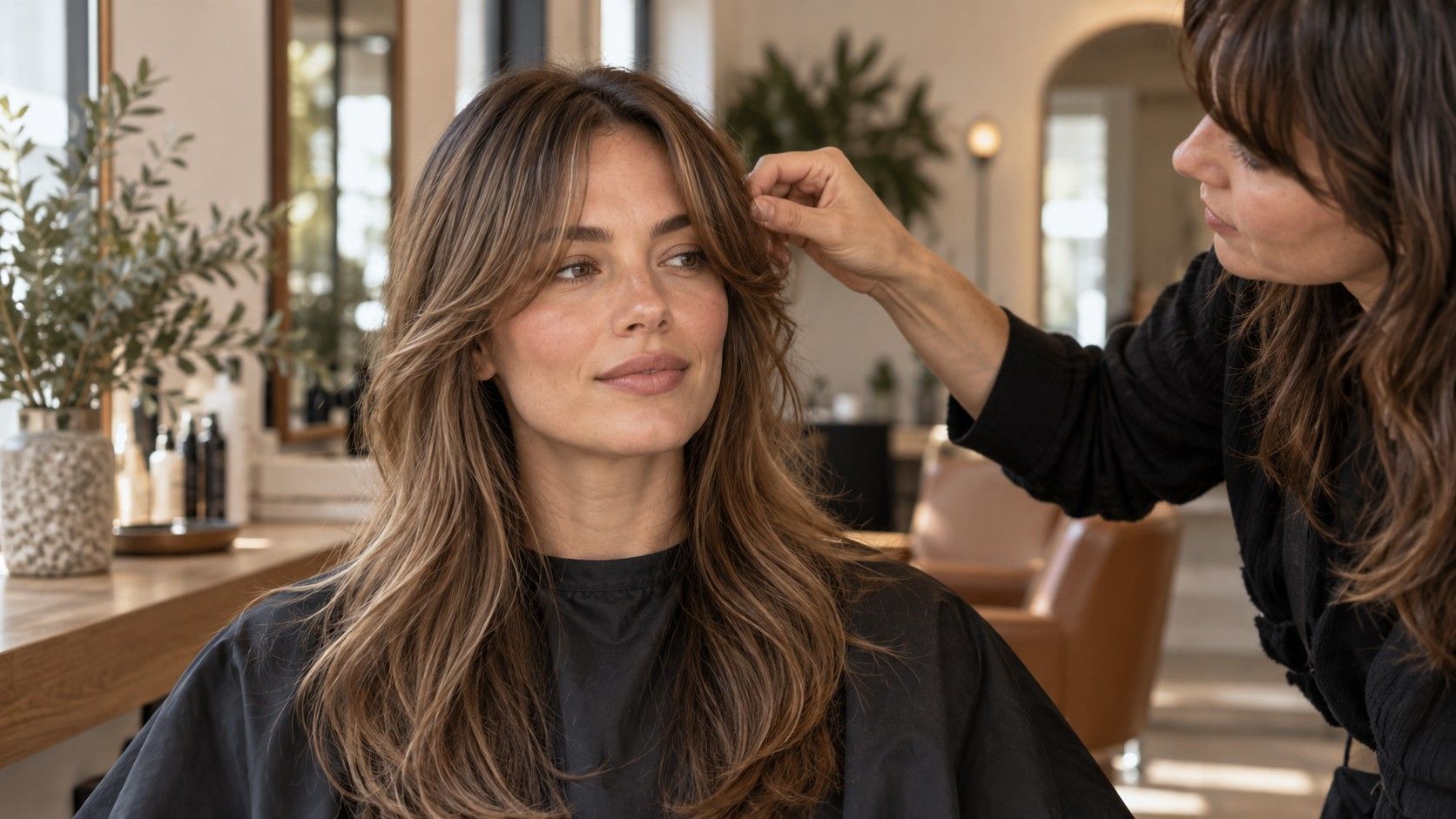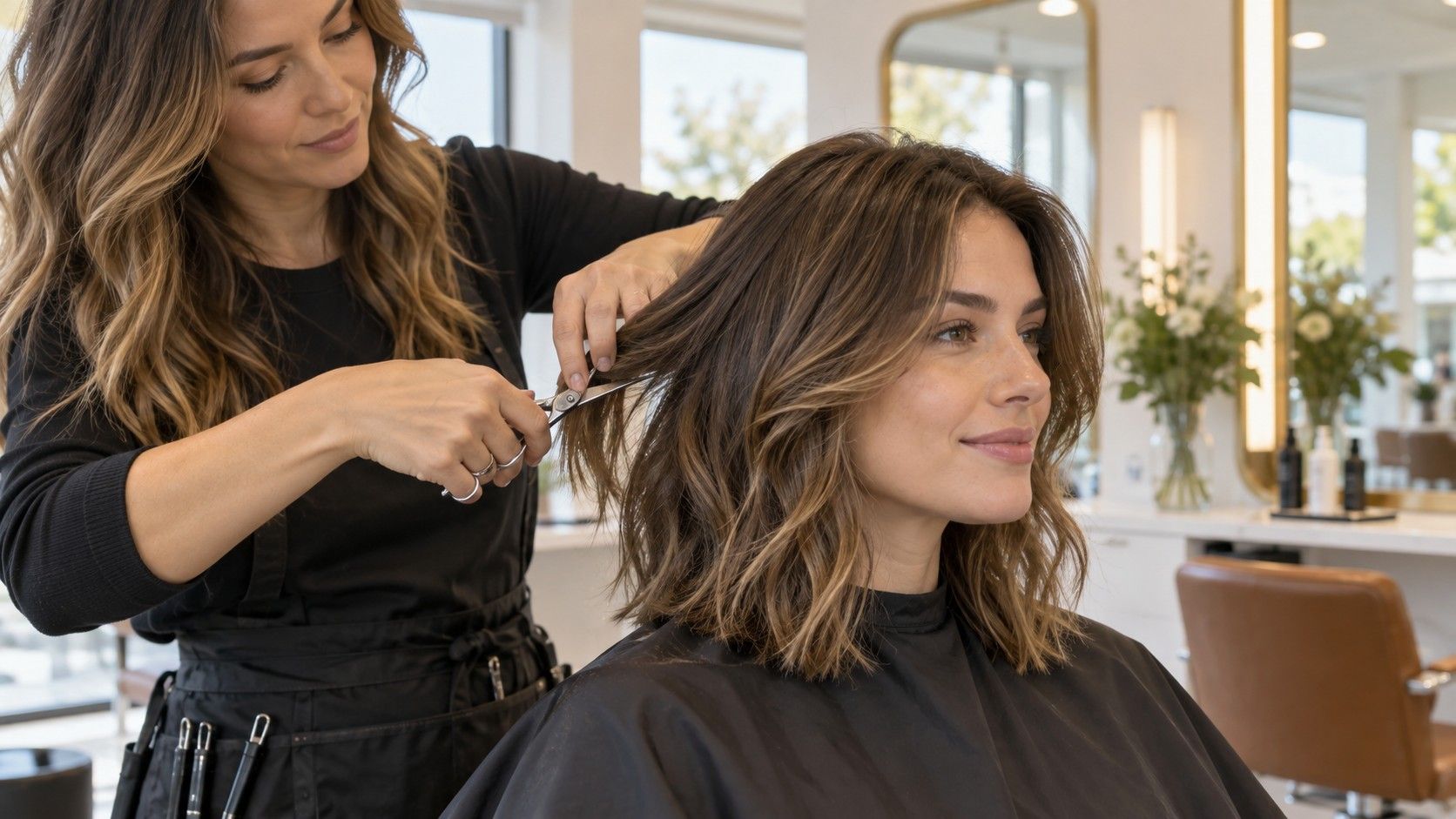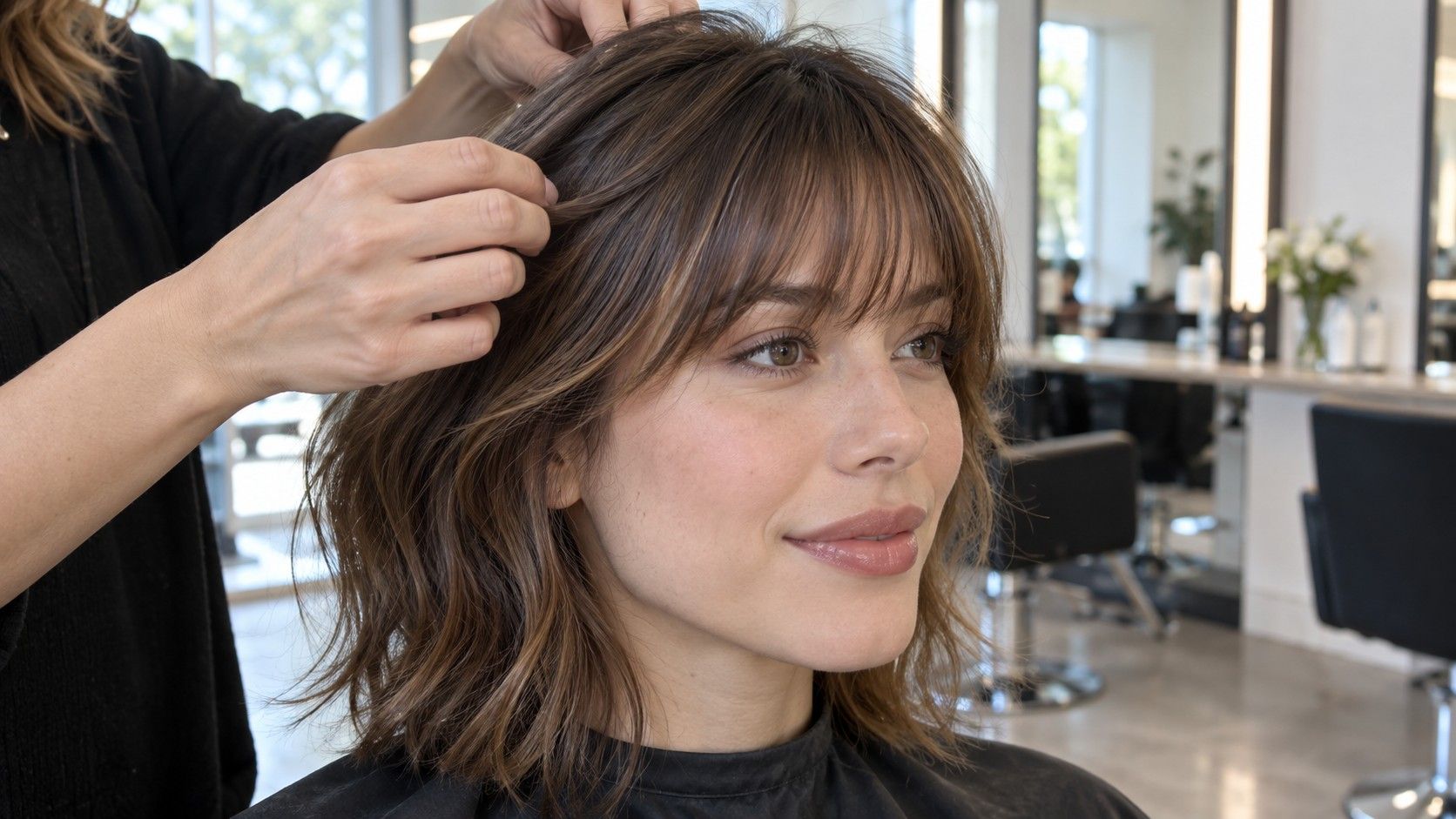
Bangs are measured in moving targets. The same fringe can sit at the brows after a careful blow-dry, lift above them when it dries naturally, then part in a different place after a humid walk. A useful bangs length guide is therefore less about one magical measurement and more about choosing a landmark, allowing for your texture, and knowing when a trim will make things worse.
Measure the fringe in the state you wear it
Do not judge length from wet hair hanging straight down. Wet strands stretch, and a cowlick may not show itself until the roots dry. Start with clean, dry hair in your usual part. Look at the center piece first, then the outer edges. The brow, the top of the eyelashes, the cheekbone, and the corner of the mouth are all useful landmarks because you can find them again without a ruler.
Take a front photo and a three-quarter photo in daylight. The front view tells you whether the line is balanced; the angled photo shows whether one side is projecting farther because of a part or growth pattern. If you straighten your fringe but leave the rest wavy, measure it after that styling step. The intended finish, not the wash-day possibility, should determine the cut.
Eyebrow, cheekbone, and micro lengths do different jobs
Eyebrow length is the familiar reference point. A fringe that just skims the brows can look soft when it separates slightly, but it will enter the eyes as it grows. A shorter version that sits above the brows feels clearer and tends to need more visible maintenance. Neither is more flattering by default; the brow line, glasses, and density of the fringe all change the picture.
Longer curtain bangs often begin around the bridge of the nose or lip and sweep outward toward the cheekbones. Their apparent length is deceptive because they curve away from the face. Micro bangs sit well above the brows and make the forehead very visible; they are a style choice, not a low-maintenance escape. They also leave little room for error if natural shrinkage has been underestimated.
| Reference length | How it behaves | Trim decision |
|---|---|---|
| Micro, above the brow | Strong and exposed; grows visibly fast | Leave fine detailing to a stylist. |
| At or just above the brow | Classic line with moderate movement | Trim when it starts entering the lashes. |
| Lash-skimming | Soft but easily irritating | Style upward first; do not cut in frustration. |
| Cheekbone curtain fringe | Blends easily into layers | Adjust the center before shortening the wings. |
Texture can change apparent length overnight
Wavy and curly bangs shrink as they dry, sometimes unevenly across the forehead. A stylist who cuts them wet without checking the dry pattern may leave the shortest area at a surprise height. Straight hair has a different trap: it shows every fraction of an uneven edge, and a soft bend can make the center look shorter than the sides. The safe approach is to remove length gradually and reassess with the hair dry.
Humidity adds another layer. A smooth fringe may widen and shorten as the roots lift; a wavy fringe may form separate pieces. Think about the weather where you spend most of your days, not only a perfect indoor mirror. If your fringe changes character each season, a slightly longer, softer shape gives you more options than a very exact blunt edge.
A cowlick changes the starting point, not your chances
A cowlick is a direction in the root, not a failure of hair. The common mistake is cutting against it with a heavy straight line and then trying to iron it into submission every morning. A side-swept fringe can follow the natural movement, while curtain bangs can split around it. Sometimes the simplest answer is a longer center that has enough weight to settle once it is dried in the right direction.
Before the appointment, let the front air-dry once with no clips, then photograph it. That picture is more useful than a dozen polished references because it shows the exact movement the stylist needs to respect. Mention whether you change your part for workouts or sleep. A fringe that looks settled in one part can look abruptly uneven when the roots are trained another way.
Know when home trimming is the wrong fix
When bangs are one millimetre too long, it is tempting to make a quick correction before work. The problem is that hair springs after tension is released, and a small snip can become a stair-step. Avoid trimming when the fringe is wet, freshly straightened, or pulled between your fingers. Those conditions hide the final length. Also avoid cutting an uneven fringe by making both sides shorter; that is how a manageable issue turns into micro bangs.
If you must remove a single obvious point, use proper hair scissors, dry hair, and tiny vertical snips into the end rather than one horizontal chop. Stop early. For a changed shape, a cowlick problem, or a fringe that has become too dense, book a professional trim. The cost and time are usually smaller than the weeks spent trying to disguise a rushed correction.
Plan the trim schedule around your tolerance
Hair growth is not identical for everyone, but most people notice a fringe changing within three to five weeks. A brow-level line becomes lash-skimming; curtain pieces become more integrated with the haircut. Decide which stage you actually enjoy. If you like the first ten days of a crisp fringe but hate the next month, ask for a maintenance rhythm before committing to it.
Keep one reference photo from the day the bangs feel right and another from the day they become inconvenient. These photographs make future requests precise: you can point to the preferred point instead of asking for shorter. The best bang length chart is ultimately your own sequence of real hair days, because it accounts for your drying method, glasses, part, and patience better than any universal diagram can.
That record also makes a seasonal change easier. You may want a longer fringe in damp months and a neater line when the air is dry, without treating either version as a mistake.