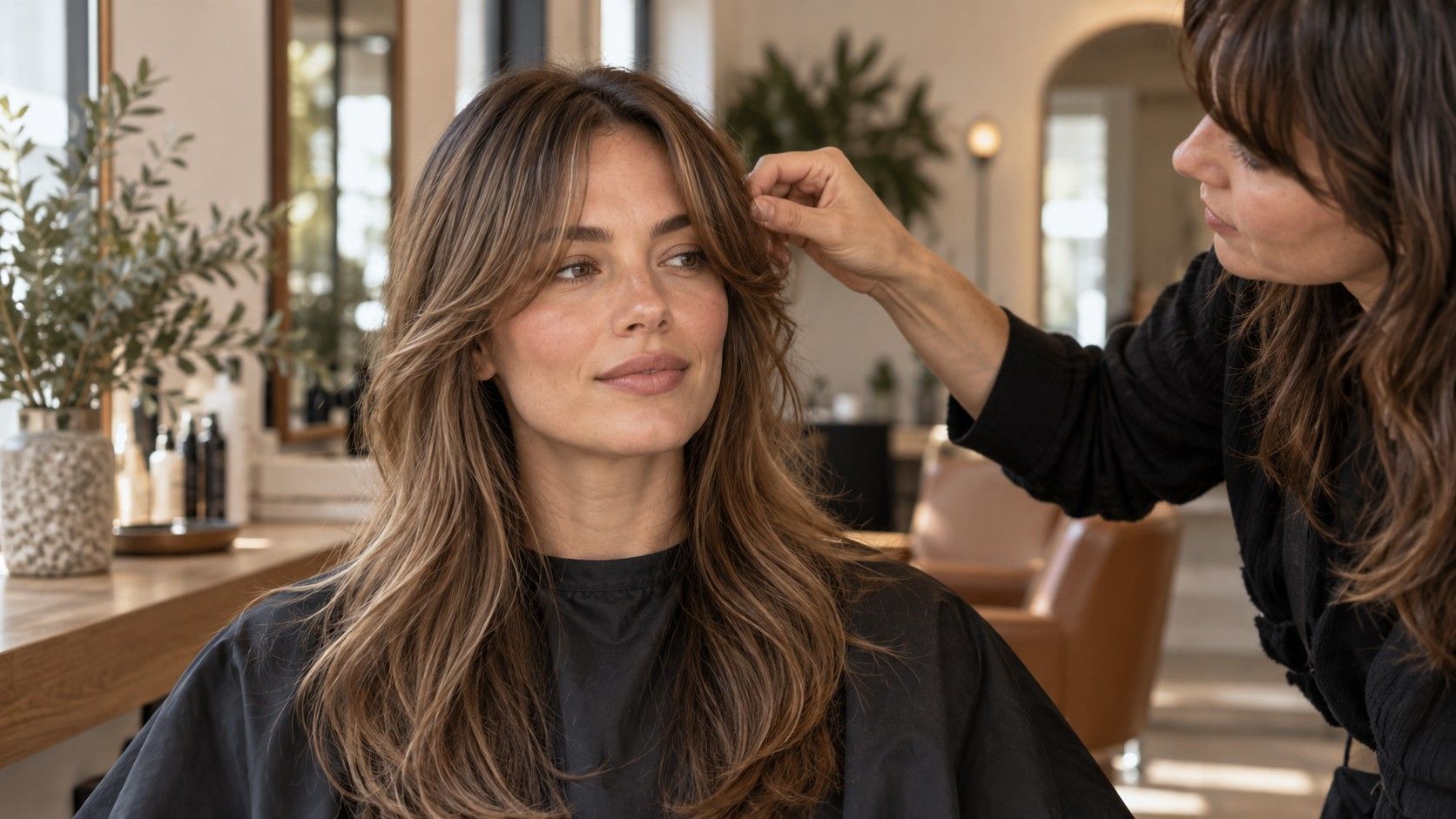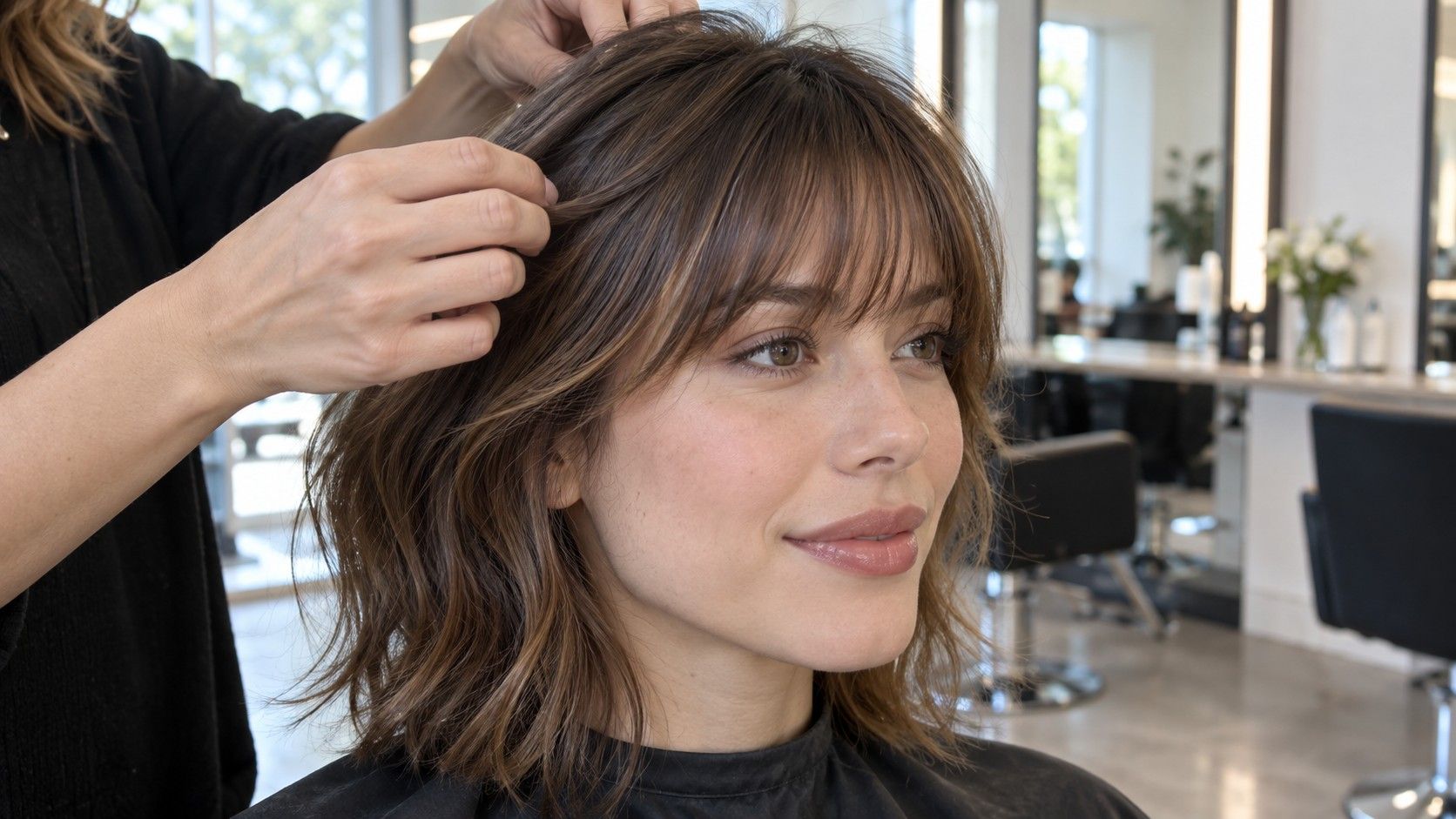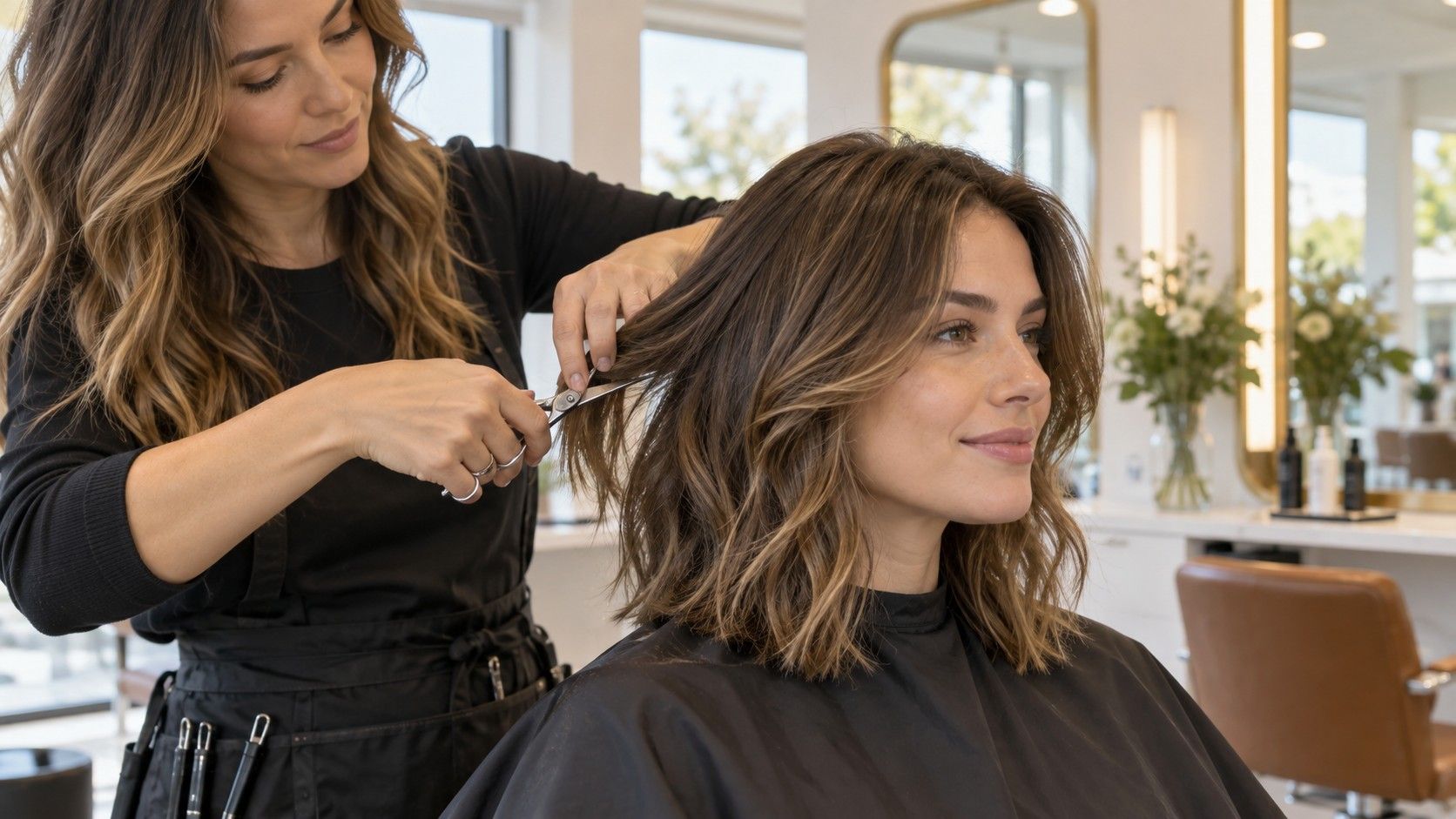
Grey eyes are rarely one flat colour. They can look steel-blue by a window, greenish beside olive clothing, and nearly charcoal in a dim salon mirror. That change is useful rather than confusing: the best hair color for grey eyes is usually the one that gives the eye colour a clear contrast without making your natural colouring feel disguised.
Notice what changes your grey eyes before choosing a formula
Spend two ordinary days looking at your eyes in daylight, not only under a bathroom bulb. A phone photo near a north-facing window and another outside on an overcast day will often show whether blue, green, or silver is most visible. Bring those photos to the appointment; they are more reliable than trying to name an undertone from memory while wearing salon lighting.
Also notice the colours you already reach for. Navy, charcoal, camel, soft white, and berry lipstick can each pull a different note forward in grey eyes. That does not mean your wardrobe must dictate your hair, but it prevents a common disappointment: selecting an online swatch because it makes someone else’s eyes glow, then finding that its warmth fights every colour you wear.
Choose warm or cool shades by the effect you want
Cool shades such as mushroom brown, ash beige, smoky brunette, and soft pearl blonde can make a blue-grey or silver note look crisp. They work especially well when the natural root already sits in a cool medium brown range. Ask for softness rather than an aggressively grey toner; a very matte result can look flat once the first gloss fades.
Warm shades create a different effect. Honey ribbons, cinnamon brown, muted copper, and golden dark blonde often make grey eyes look more changeable, with green or amber flashes. The useful distinction is controlled warmth versus blanket orange. A colorist can place warmth through the mid-lengths and around the face while keeping a cooler root, which gives the colour movement without demanding a complete identity change.
| Direction | What it can emphasize | Useful salon request |
|---|---|---|
| Mushroom or ash brown | Silver and blue-grey | Fine cool dimension, not a solid opaque tone |
| Beige or pearl blonde | Light, clear contrast | A root shadow that matches the natural base |
| Honey or cinnamon | Green and warmer flecks | Warm ribbons with a neutral base |
| Soft copper brunette | Changeable, smoky eyes | A gloss first, then reassess in daylight |
Set the depth before you chase a particular tone
Depth is the part of a hair colour decision that photographs hide. A pale blonde can make grey eyes stand out through contrast, but if your brows, root, and usual makeup are deep, the maintenance may become the loudest thing about it. Equally, moving from light brown to almost-black can frame the eyes beautifully while leaving you with a hard regrowth line every few weeks.
Try to compare swatches at least two levels lighter and darker than your current hair. Hold them near the face in daylight and ask which one makes the skin look rested without extra makeup. This is not a rule about looking brighter or younger; it is simply a practical test for whether the level has enough separation from your natural features to feel intentional.
Use dimension when one all-over shade feels risky
For most people, grey eyes hair color does not need to be a single formula from root to end. Lowlights can keep a blonde believable; a few fine highlights can stop a brunette from reading as a block. Face-framing pieces are the quickest way to test whether a cooler or warmer direction suits you, because they sit where the eye notices colour first.
Placement matters as much as the shade name. Ask the colorist where the lightness will begin, how wide the ribbons will be, and whether the result will still make sense after eight weeks. A broad money piece may be exciting in a reference photo but high-maintenance in daily life. Fine woven brightness grows out more quietly and usually leaves more room to change your mind.
Bring a useful reference note to the salon chair
Bring two photos for the overall depth and two for the tone, rather than four copies of one heavily edited look. Say what you like in each: perhaps the neutral root in one image, the beige ends in another, or the warmth only around the face. Then say what you do not want, such as strong yellow, violet cast, stripey highlights, or an obvious line at the scalp.
A patch or strand test is worth discussing if you have old dark colour, recent henna, mineral-heavy water, or fragile lightened lengths. These details affect what is realistic in one appointment. A careful colorist may suggest a gloss, partial foil, or gradual lift first; that is often a more successful route than promising an exact swatch against the condition of the hair.
Plan maintenance around the shade, not the first-day mirror
Cool blonde and ash brown usually need toning sooner than people expect, while copper and honey tones can lose their sparkle with frequent washing. Ask which change you will notice first: exposed warmth, dullness, or a root line. The answer tells you whether your maintenance is likely to be a gloss, a toner, a partial highlight, or simply a gentler wash routine.
Before leaving, look at the finished colour near a window if possible and take one unfiltered photo. Keep the formula notes, the gloss name, and the date. Six weeks later, that small record makes a much better conversation than saying the best hair color for grey eyes looked different somehow. You can point to the exact direction you want more of, less of, or would rather leave behind.
When you compare options, keep the decision deliberately narrow. Ask the colorist to show a cool and a warm swatch at the same depth, then look at both beside your natural root. The question is not which one changes your eyes most dramatically in the first minute; it is which one still makes sense with your usual coat, glasses, and everyday makeup. If the answer is close, choose the version that will grow out more gently. A neutral root with selective tonal pieces gives future appointments room to move cooler or warmer without undoing a solid permanent colour.