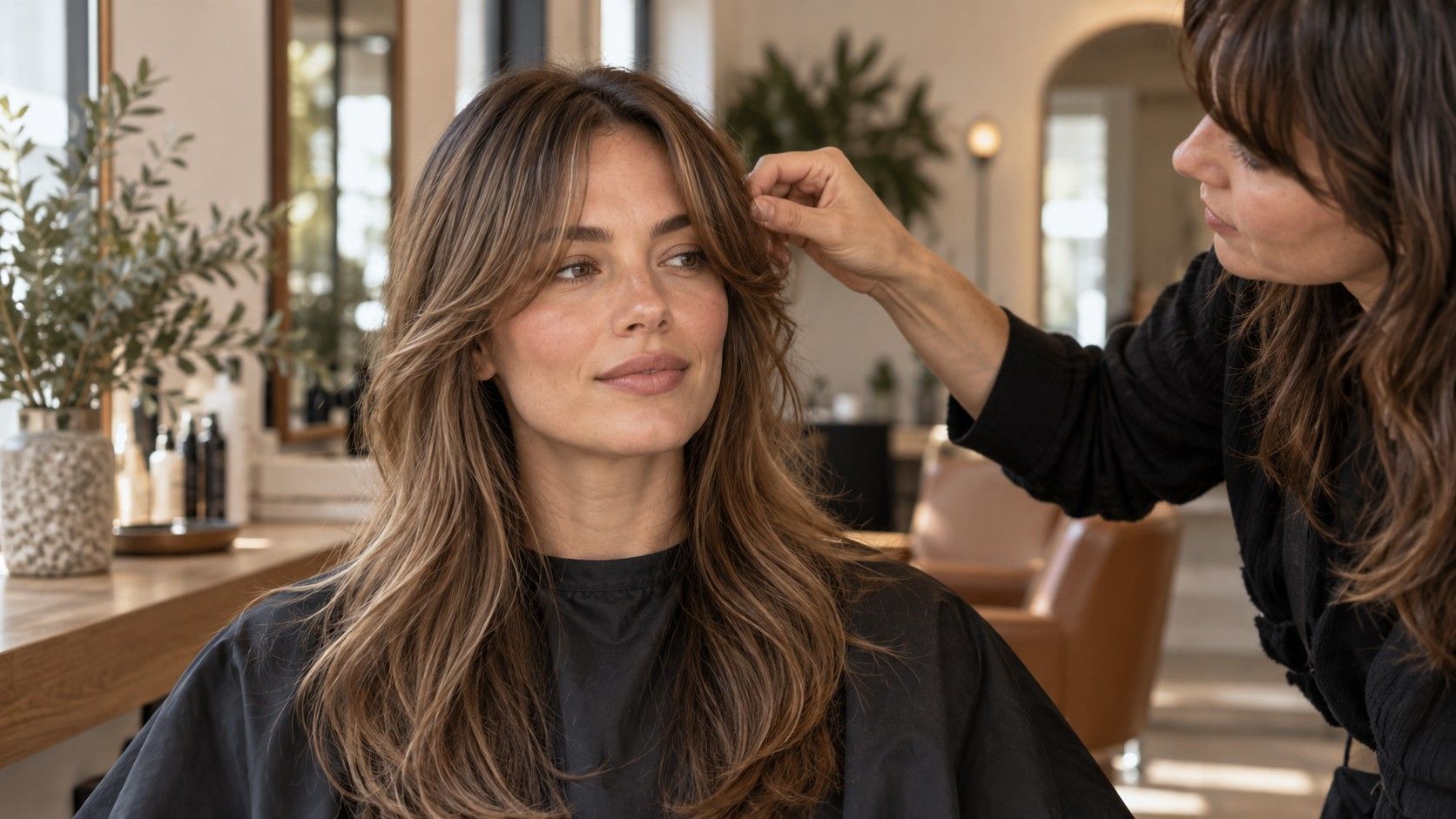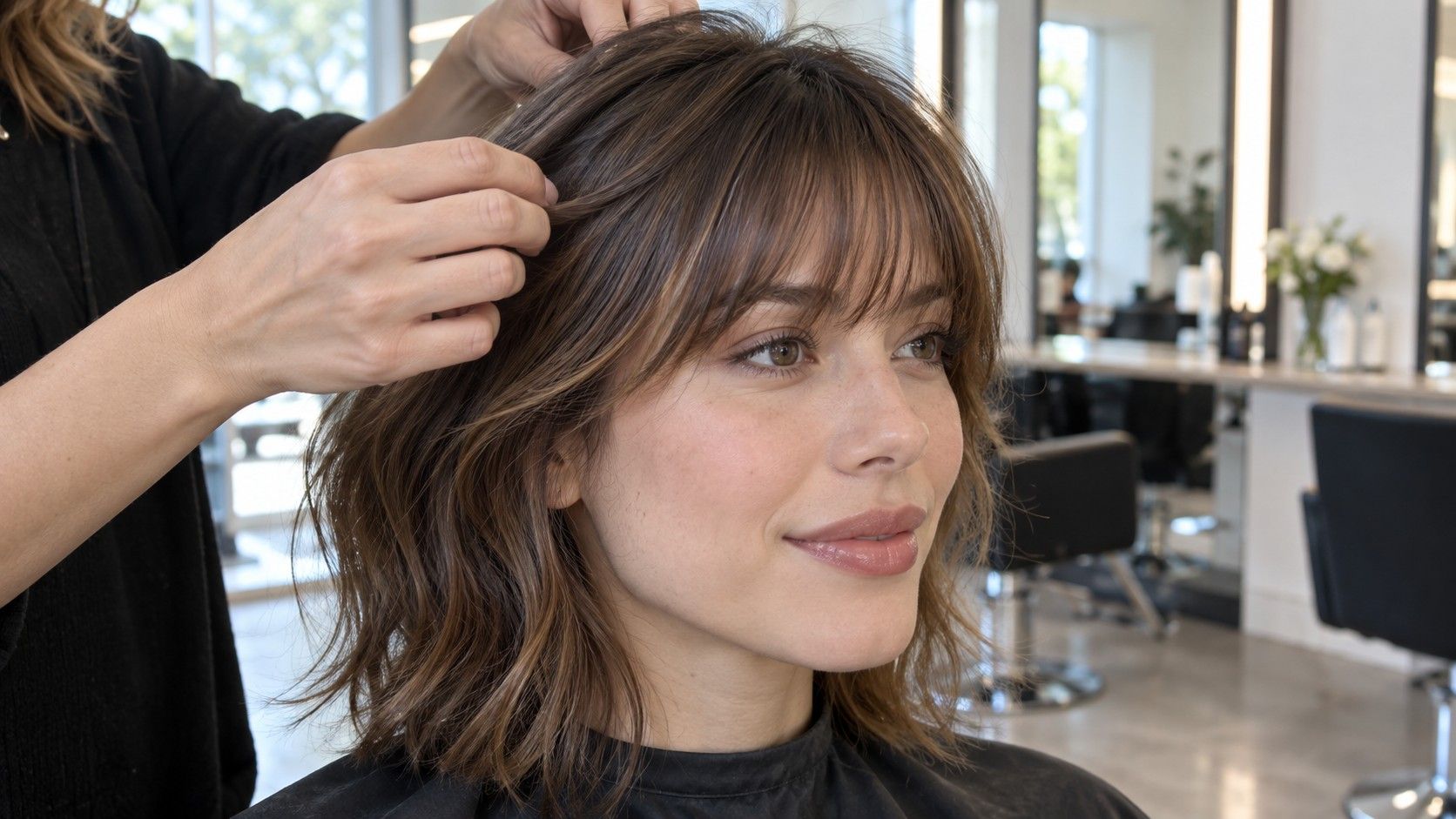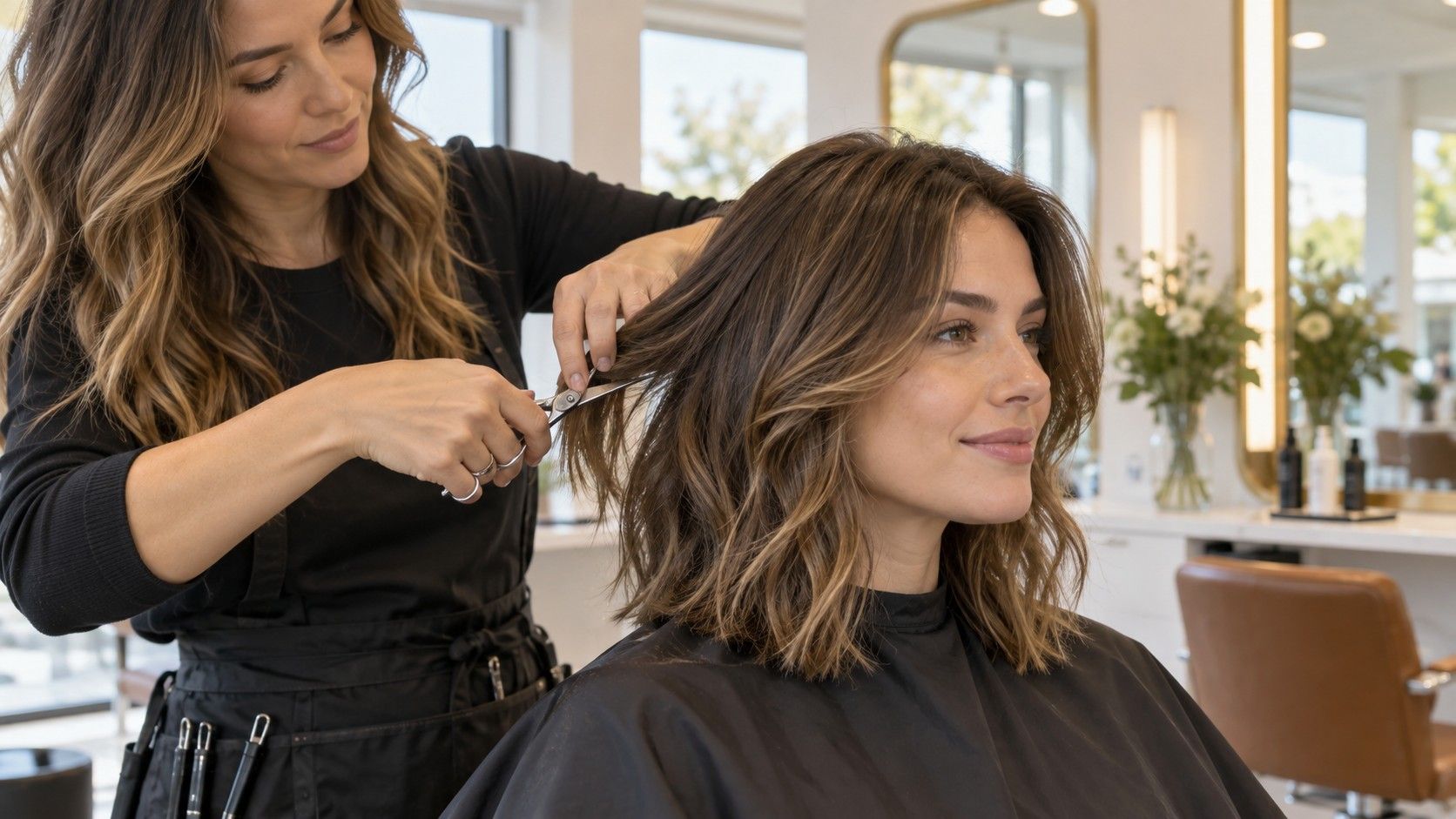
Wavy hair can look cooperative in a salon and completely different after its first wash at home. That is why the best haircut for wavy hair is rarely a named style copied from a picture. It is a shape that leaves room for your pattern to form, puts weight where you need it, and does not assume you will recreate a full blow-dry every morning.
Start the consultation with your unstyled hair
Waves are often treated as halfway between straight and curly hair, which misses the practical part. They may be loose at the crown and tight around the ears, smooth underneath and frizzy on top, or almost straight until humidity changes the whole outline. Arrive with your hair in a reasonably natural state if you can. A stylist learns more from the way it dries on a normal day than from a carefully flattened version.
Bring a photo of your hair after its best ordinary wash day and another after a difficult one. The contrast shows density, shrinkage, and where the pattern breaks down. Say what you actually use: air-dry, diffuser, brush, or a quick refresh with water. A cut that depends on ten minutes of sectioned styling is not necessarily wrong, but it should be a deliberate trade rather than a surprise.
One-length cuts and layers are solving different issues
A one-length cut gives wavy hair weight. On fine or medium-density hair, that weight can stop the ends looking feathery and make the wave pattern look calmer. A blunt long bob is a good example: it can feel substantial without asking the hair to produce lots of volume. The risk is a triangular outline if the hair is dense and expands from the sides while the crown stays close.
Layers remove weight and create room for movement. They can bring waves to life around the cheeks and stop a heavy curtain of hair from dragging down the face. Too many short layers, however, can make a loose pattern look frizzy and disconnected. Ask where the shortest layer will sit when dry. If it lands at the widest part of your head, it may create a shape you did not intend.
| Cut direction | Often helpful for | Potential drawback |
|---|---|---|
| Blunt or near one-length | Fine waves that need a denser edge | Dense hair may spread into a triangle. |
| Long, soft layers | Medium to dense waves needing movement | Ends can look thin if the layers are overdone. |
| Long bob | A contained shape with a visible wave pattern | The nape may spring up more than the front. |
| Shag-inspired layers | Strong waves and a relaxed, textured finish | Requires acceptance of volume and irregularity. |
Bobs, shags, and long cuts ask for different routines
A wavy bob can be striking because the shape has enough structure to hold the movement. The important detail is where it ends. At the jaw, a wave may kick outward and widen the silhouette; below the jaw, it often has more room to bend. A long bob is more forgiving for a first experiment because it keeps some tie-back ability. It also gives the hair enough length to form a wave rather than a small flick.
A shag is not just a pile of layers. The successful versions have a clear plan for the crown, face frame, and perimeter. They suit people who enjoy texture and do not need every piece to match. Longer cuts give maximum flexibility, but they can become heavy if the waves only appear in the last few inches. In that case, strategic face framing may do more than cutting the whole length shorter.
Have the wet-cut and dry-cut conversation early
Some stylists cut waves primarily wet and refine them dry; others do much of the shaping dry. Neither method automatically produces the better haircut. What matters is whether the stylist checks the natural pattern before committing to the perimeter. Wet hair can hide shrinkage and make the ends look longer and more uniform than they will be once the wave returns.
Ask a plain question: will the final length be checked dry in the way I wear it? A good answer includes your density and how much the nape springs. If your hair has several patterns, dry refinement can be especially valuable around the face and at the bottom edge. It does not have to mean every strand is individually cut; it means the finished outline has been seen in reality, not only while stretched.
Judge the haircut after the first real wash
The first salon result includes professional product choice, careful drying, and someone else working from the back of your head. Your test begins after the next wash. Use your normal cleanser and leave-in product, then resist the urge to keep touching the hair as it dries. Photograph it from the front and side once it is fully dry. Look for the overall line before inspecting small frizzy pieces.
Notice whether the cut creates a predictable shape on the second and third day too. Some wavy hair improves after sleep; some needs a water refresh or a diffuser at the roots. If one side consistently becomes bulky, that may be a placement issue that can be adjusted. If the whole cut only works after heat styling, decide whether that routine is acceptable before asking the stylist to remove more length.
Choose a cut that fits the refresh routine you already have
Product cannot replace a bad outline, but it can reveal a good one. A light mousse or gel may help waves clump; a diffuser can lift roots without brushing them smooth. Those are useful tools, not obligations. Someone who wears their hair in a loose bun for work will have different priorities from someone who air-dries and leaves it down every day. Mention hats, exercise, and commute humidity at the appointment.
The word hairstyles covers everything from a polished wave to a deliberately undone shag, so it is too broad to make the decision for you. Pick the version you can maintain when you are busy. A successful wavy haircut still has a readable shape after a simple wash, a night's sleep, and an ordinary weather forecast. That quiet reliability is more valuable than a dramatic finish that disappears by lunchtime.
Take a photo when the outline works, including one from behind. It will show whether the next trim needs more weight, a softer face frame, or simply the same reliable shape again.