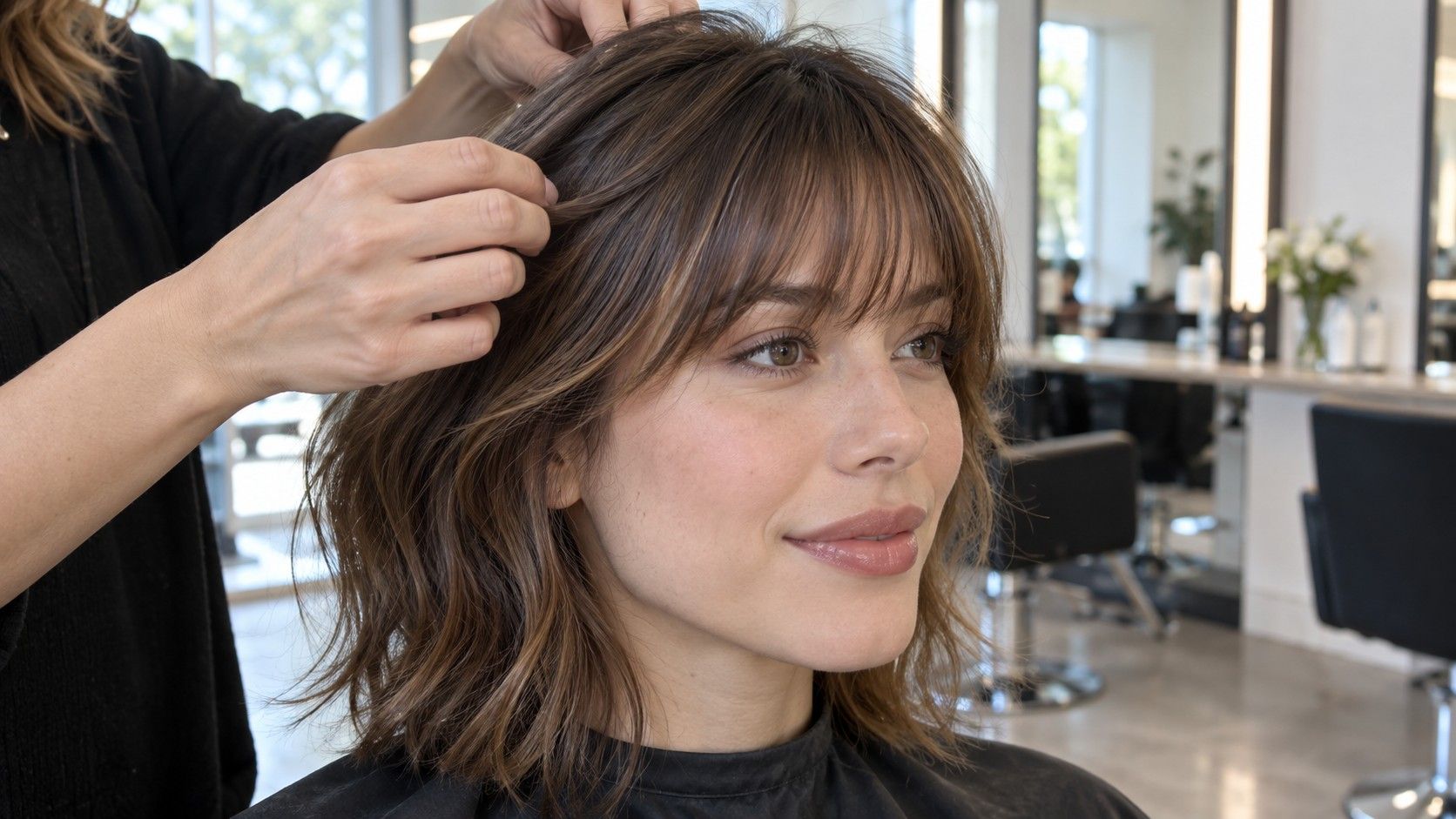
An oblong face does not need to be corrected; it simply gives a haircut a particular set of proportions to work with. The useful question is where you want the eye to pause: at the cheekbones, the jaw, the fringe, or the shoulders. That is more reliable than taking a screenshot to a salon and hoping that one label will do all the explaining.
First, check whether the face is really oblong
People often call any long-looking face oblong, although the distinction matters when you are choosing a cut. An oblong face is usually noticeably longer than it is wide, with a fairly even width through forehead, cheeks and jaw. An oval face tapers more; a rectangular face may have a stronger, squarer jaw. Take a straight-on photo in daylight with hair pulled back, then compare the width at the temples with the width at the jaw.
Do this before studying haircut pictures. A high hairline, a tall crown, or hair pulled into a severe bun can create length that is not really part of the face shape. If your photo changes dramatically when you let your natural part fall back into place, work from that second photo. It is the version your cut has to live with on an ordinary Tuesday.
Put width near the face instead of height on top
The best haircut for an oblong face usually has some sideways movement around the cheekbones or jaw. That can mean a blunt bob that reaches the jaw, soft layers beginning below the cheekbone, or waves that are encouraged to sit out rather than up. A lot of height at the crown with very flat sides can make even a good cut feel more severe by the end of the day.
Length is not forbidden. Long hair works when the lower half has body and the layers are placed deliberately. A center part with long, straight, unlayered hair can create two vertical curtains; a slightly off-center part or face-framing pieces break that line. Ask the stylist where the first layer will land when the hair is dry, not just where it is cut while wet.
| Starting point | What it tends to emphasize | A practical adjustment |
|---|---|---|
| Jaw-length bob | Cheeks and jaw | Keep enough fullness at the sides; avoid an overly stacked crown. |
| Collarbone lob | Shoulders and lower face | Add a bend or soft layers so the ends do not hang as one long line. |
| Long layered cut | Movement through the middle | Place the first face frame near cheekbone or lip level, according to texture. |
| Very short crop | Forehead and bone structure | Use texture or a fringe rather than extra height at the crown. |
Bobs, layers, and texture solve different problems
A bob is often suggested because it interrupts vertical length, but the word covers very different shapes. A French bob near the mouth can look lively if you like visible cheekbones and do not mind regular trims. A jaw-skimming blunt bob gives a clean horizontal line, though very fine hair may need a little internal texture so the sides do not collapse. A collarbone lob is the quieter option for someone who still wants a ponytail.
Layers are useful when hair is dense or naturally wavy. They let the sides expand where a one-length cut might form a triangle. With thin, straight hair, too many layers can have the opposite effect: wispy ends and more visible length. The consultation detail worth pinning down is whether the stylist means surface layers, face framing, or removed weight. Those are not interchangeable instructions.
When a fringe earns its place
A fringe can shorten the apparent forehead-to-chin distance, but it should not be an automatic prescription. Full bangs create a distinct horizontal edge and suit people willing to style them each morning. Curtain bangs are less committal: their center is shorter and their outer pieces connect to the rest of the cut. They work particularly well with a side-swept or soft center part, provided a cowlick is not pushing them apart.
Before committing, clip a section forward at home and look at it in the bathroom mirror and outdoors. The bathroom version tends to flatter everything; daylight shows whether the fringe becomes transparent or separates. If you wear glasses, bring them to the appointment. The meeting point between fringe, brow and frames can change the whole balance more than a half-inch of length.
Use photos as evidence, not instructions
Bring three photos rather than one: one for the length, one for the texture, and one for the overall mood. Then add a current photo of your own hair air-dried. A picture of a sleek jaw-length bob says little if your hair has a strong bend at the nape or if you never use a round brush. The stylist can see the conflict sooner when the references are separated.
It also helps to state what you are unwilling to do. If daily heat styling is off the table, say so before the cape goes on. If the last haircut looked too narrow at the temples after four weeks, say that too. The phrase haircut oblong face women covers a wide range of hair textures and habits; the useful decision comes from matching the outline to your own routine, not from winning a face-shape quiz.
Judge the cut after a normal wash, not just the blow-dry
The salon finish is a demonstration, not the final verdict. Wash the cut once, use your usual products, and let it dry in the way you realistically manage. Check the outline from the front and side at the moment when you normally leave home. A cut that needs one extra minute at the sides may be perfectly manageable; one that needs a full restyle to avoid a tall crown is asking for a lifestyle change.
Give minor settling a week, especially with a bob or new fringe. Then decide whether the issue is length, weight, parting, or habit. Those are specific adjustment requests, and they make a follow-up far more productive than saying the cut feels wrong. Good balance is not a formula drawn over your face; it is a shape that still reads well when you have not had time to think about it.
Keep the consultation photograph on your phone for the next appointment. It is a better record of what worked than a vague memory of a haircut that felt right. You can point out the amount of width, the fringe position, and the parting instead of beginning the choice from zero again.