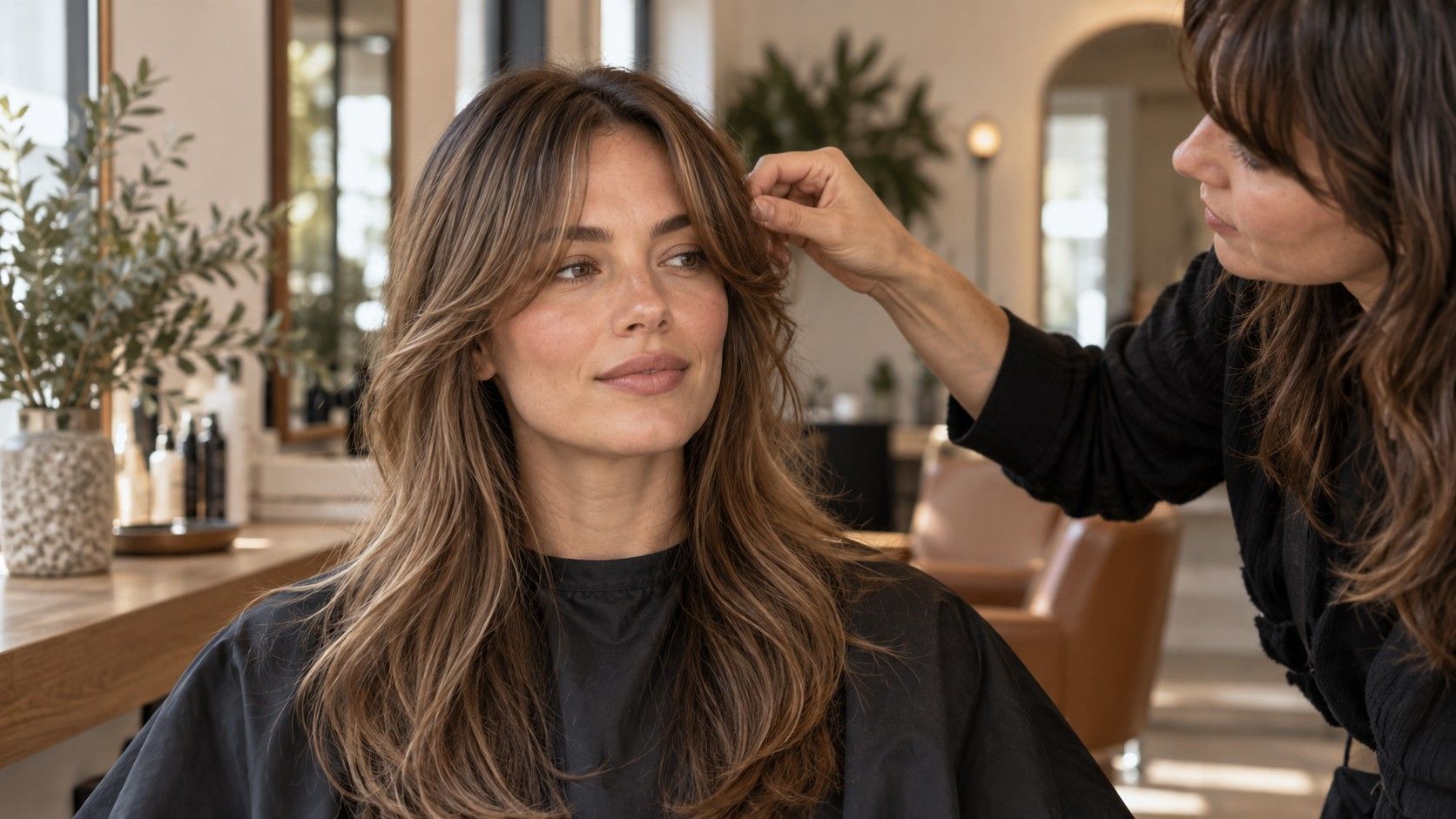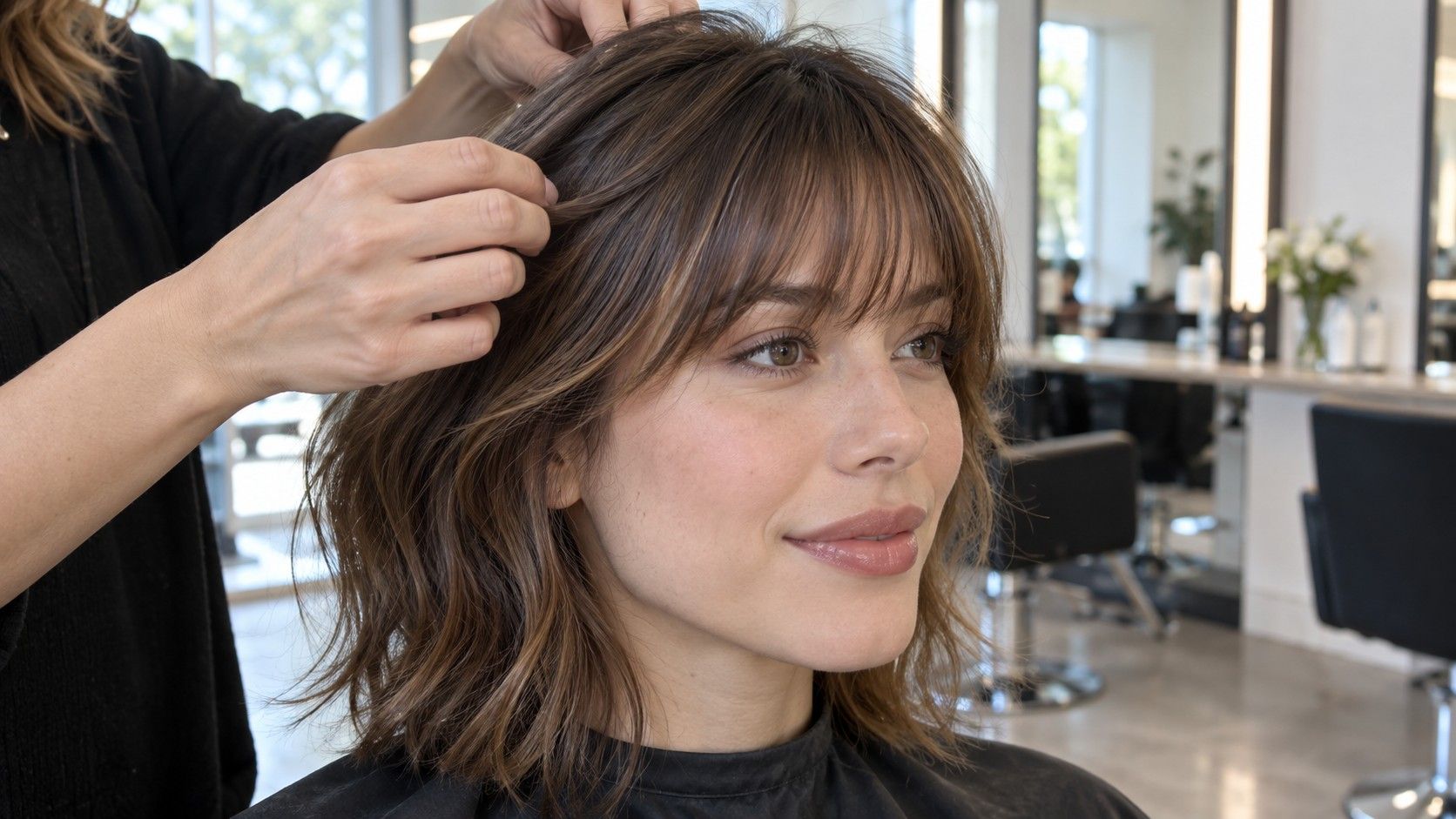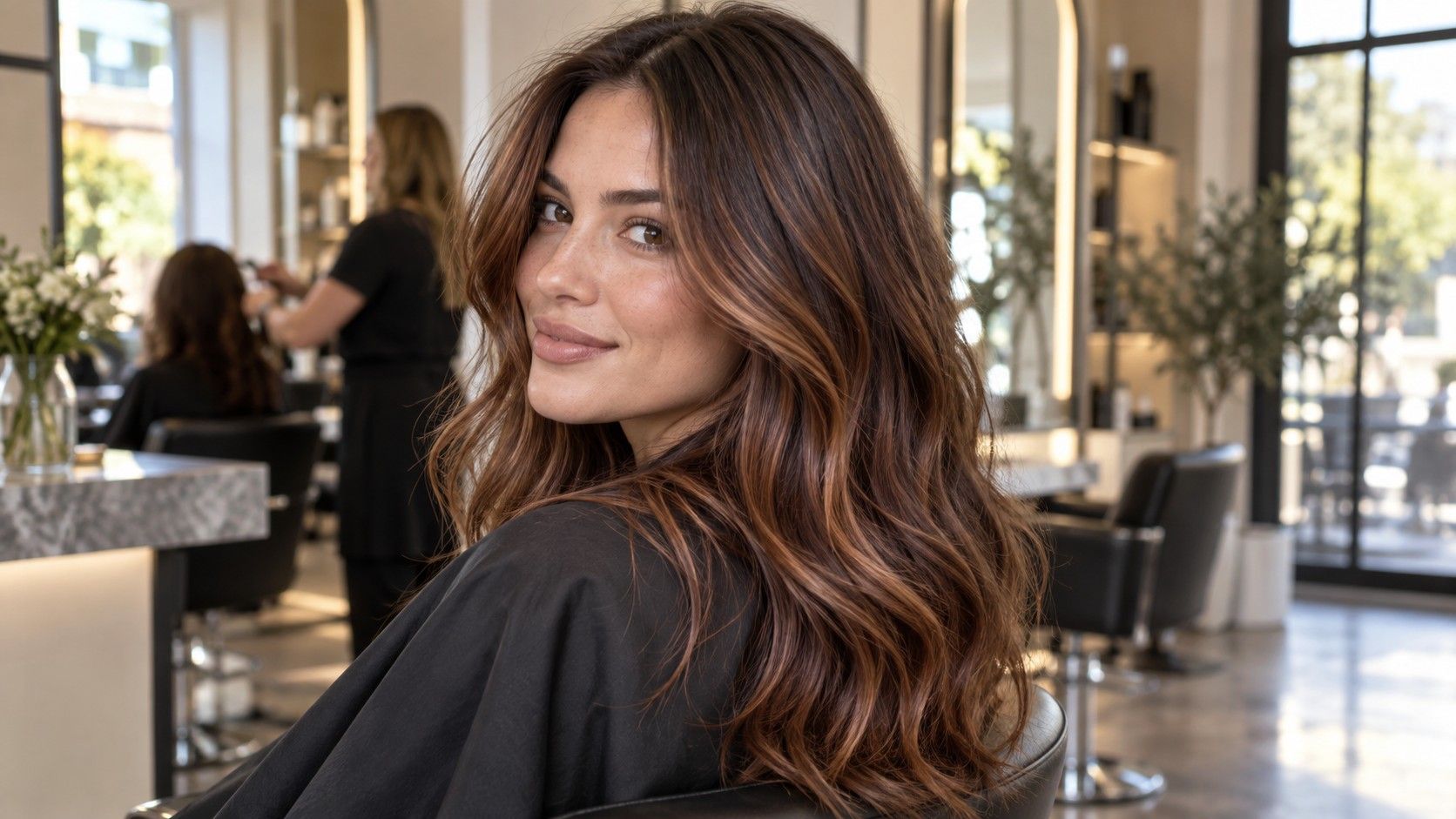
The most promising hair color trends for 2027 look less like costume changes and more like considered adjustments: a brunette made lighter around the face, a blonde with a softer root, or copper tailored to the warmth already in the skin. That is good news if you enjoy a new colour but do not want to organise your life around the next salon appointment. The useful question is not which shade is everywhere this year. It is which version will still look intentional after six weeks, a rainy commute, a few washes, and a hurried ponytail.
Read the trend as a direction, not a uniform
Trend photos are designed to stop a scroll. They often show freshly curled hair under studio lights, where a glossy beige blonde or dark cherry brunette can look almost unreal. Real hair has a starting level, old colour in the lengths, porous ends, and a parting that may expose roots sooner than expected. Before choosing a 2027 hair color, separate the image into the parts a colourist can actually control: the base, the pieces of lightness, the warmth or coolness, and the finish.
A useful test is to save two references rather than twenty. Pick one image for the depth you like and another for the placement of brightness. Then find an unfiltered photo in daylight. If every reference depends on a blowout and a ring light, it is inspiration, not a reliable instruction. I also look at how the color reads when the hair is straight. A beautiful ribbon of highlight may disappear in a low bun, while a soft face frame still earns its keep on an ordinary Tuesday.
There is a difference between a colour that feels current and a colour that asks for constant rescue. A change of one or two levels, a gloss, or a few well-placed highlights can create the first without automatically signing up for the second.
Soft brunette is gaining depth instead of obvious stripes
For brunettes, the appealing direction is dimension that is visible when you move, not a dense pattern of light stripes. Think espresso with a quiet cocoa sheen, medium brown lifted by caramel only around the front, or a deep neutral brown with a slightly cooler shadow at the root. These shades suit people who want their hair to look richer rather than dramatically lighter. The effect comes from a small gap between the darkest and lightest pieces, so the eye sees texture before it sees highlights.
The practical advantage is that soft brunette grows out kindly. Ask where the lightness will begin and whether it will touch the root. Foiled highlights taken right to the scalp can look polished on day one but make a root line much more visible. A melted root or painted mid-lengths generally buy more time between appointments. This matters most when your natural hair is very dark, because even a modest lift can reveal a clear contrast at the part.
| Direction | What it gives you | What to check first |
|---|---|---|
| Espresso with a gloss | Shine and a denser-looking finish | Whether the tone will fade warm on porous ends |
| Soft cocoa dimension | Movement without looking obviously highlighted | How light the front pieces should be against your skin |
| Rooted brunette with ribbons | A brighter result with less obvious grow-out | Whether the ribbons still show when hair is worn straight |
Bring a photo of your hair in natural light as well as your ideal result. It gives the salon a more honest starting point than a vague label such as “mushroom brown.” That label can describe a dozen quite different colours depending on the person using it.
Blonde is moving toward softer roots and selective brightness
Many blonde directions for 2027 have a lived-in centre: a shadowed root, brighter money pieces, and lengths that are neither platinum nor deliberately yellow. This can be flattering because the face gets light without the entire head being pushed to the palest possible level. It can also be easier on hair that has already been highlighted more than once. The catch is that “low maintenance blonde” does not mean no maintenance. Lightened hair still needs moisture, occasional bond care, and a plan for brassiness.
If you are starting from medium or dark brown, ask the colorist to be candid about the number of sessions needed. A soft bronde can be realistic in one long appointment; a pale beige blonde may not be. Trying to force too much lift through old box colour is one of the fastest routes to dry, uneven lengths. It is usually wiser to leave with a warmer, healthy first step and refine the tone later than to chase a single reference at the expense of the hair.
Toning deserves a specific conversation. Violet products can help pale yellow, but they can make very porous ends look dull or lilac. Blue is aimed at orange, not every kind of warmth. A salon gloss is often a gentler way to tune the overall look, though it fades. Ask how the tone is likely to change after four weeks and what you should use at home, rather than buying a strongly pigmented shampoo on the way out.
Copper is becoming more personalised
Copper has been popular long enough to outgrow the single vivid-orange version. The wearable 2027 versions range from muted cinnamon through strawberry brown to clear auburn. The best one is usually linked to your natural depth: a pale complexion with freckles may carry a soft strawberry note beautifully, while a deeper base can make a burnished auburn look more believable than a bright orange overlay. Copper is not reserved for one skin tone, but its warmth needs to be chosen deliberately.
There are two questions worth asking before committing. First, how much red pigment are you comfortable seeing as it fades? Copper molecules are small and tend to slip out quickly, especially from lightened hair. Second, do you mind a warmer reflection at the root? A gloss over a brown base can be a sensible trial. A full copper transformation, particularly after blonde, is a different level of commitment.
Photograph references near a window if possible. Copper shifts dramatically under warm bathroom bulbs, and an image that reads as terracotta outside may look nearly red indoors. If you wear a lot of black, navy, or cool grey, hold those fabrics near your face before the appointment. The contrast may be exactly what you love, or it may make you prefer a quieter cinnamon brown.
Make the trend work with your haircut and routine
Color placement should follow the way you actually wear your hair. A curtain fringe benefits from a little brightness around the bend, while a blunt bob often looks better with a cleaner, more even tone. On long layers, scattered ribbons can reveal movement; on tight curls, they need to be placed where the curl naturally catches the light rather than painted as if the hair were straight. This is why the same balayage reference can look elegant on one person and patchy on another.
Think about your routine before spending on a detailed color. If you air-dry most days, ask to see a reference with air-dried texture. If you routinely wear a centre part, do not base the entire design on a side-parted campaign image. If you swim often, talk about mineral buildup and whether your colour needs a chelating treatment before a toner. None of these details are glamorous, but they decide whether the result still feels like you after the first month.
Budget belongs in the decision too. A more subtle starting result can be the smart choice when you can afford a gloss every eight to ten weeks but not a full highlight refresh every six. A good colorist can usually offer a scaled version: fewer bright pieces, a lower-contrast root, or a tone-on-tone gloss that gives the haircut more presence without pretending it is a permanent change.
Take a useful set of photos to the salon
A strong consultation is specific without being controlling. Bring three images at most: one for color depth, one for placement, and one showing hair with a texture close to yours. Explain what you do not want as clearly as what you do. “I like the warm brown, but I do not want a visible root stripe” is far more helpful than “make it natural.” Mention previous bleaching, colour removers, henna, or box dye even if it was months ago; those details affect both the formula and the safest route to your goal.
Ask to see the plan in plain language. Where will the lightness sit? Will the roots be left natural, glazed, or darkened? What is likely to fade first? A consultation should make the next steps clearer, not make you feel embarrassed for asking. If the desired result needs several appointments, agree on a good stopping point for the first visit so you leave with hair that looks finished rather than like an unfinished promise.
The hair trends 2027 worth borrowing are the ones that leave room for your own coloring, haircut, and calendar. A little dimension, a softer root, or a more considered warmth can make familiar hair feel new. The most wearable shade is rarely the loudest one in the feed. It is the one that still makes sense when you catch your reflection in daylight several weeks later.